
Baroda
Decoding Gujarati cities, chapter 3

When I first realised that I would be spending four months in Gujarat, my reaction was not excitement. It was mild panic. Not the dramatic kind where you clutch your chest and faint, but the quiet kind where you stare at Google Maps and think, well… this might be boring.
In my mind, Gujarat existed in two categories: businessmen and the Rann of Kutch. That was it. The state’s entire tourism portfolio, according to my uninformed brain, consisted of salt deserts and people discussing margins over tea. I knew the Rann of Kutch was spectacular. The white salt stretching endlessly under the moonlight was too far away from where I was staying which meant my one tourist checkbox had already been eliminated.
So naturally, I assumed the next four months would involve working, eating, sleeping, and occasionally staring out of the window wondering why Google Maps had nothing exciting to offer within driving distance.
But boredom has a strange habit of pushing you towards curiosity.
While idly scrolling around the map one evening, I stumbled upon Junagadh. Then another place. And another. Slowly it started dawning on me that the massive generalisation of Gujarat being nothing more than a business hub had hidden an uncomfortable truth: the state had far more to offer than I had ever bothered to notice.
Now that weekends were free, I did what any person temporarily living in a new state would do. I began hunting for places to travel to within a 100 km radius. That distance became my unofficial weekend travel policy. Close enough to return the same day if things went wrong, far enough to feel like a proper escape.
And during this search, one city kept appearing again and again.
Vadodara.
It popped up in Google results. It showed up in ‘places nearby.’ It appeared on travel blogs. It even showed up on random Instagram posts (Zucku1, will you stop stalking me please?)
And every single time I ignored it.
Because, like many of us do with nearby places, I assumed it couldn’t possibly be that interesting.
If you live in Dilli, there is a very good chance you haven’t properly visited the Red Fort in years. Qutub Minar is probably something you saw on a school trip and mentally checked off forever. Purana Qila exists somewhere in the city, but unless someone from out of town visits, most Delhiites never feel the urge to go there again.
The irony is almost poetic: the places closest to us slowly become invisible.
I suspect if we actually conducted a survey, fewer than half the people living in Delhi would have properly explored the city’s own historical monuments.
And I was doing the exact same thing with Vadodara. Every time the name appeared on my screen, I dismissed it almost instantly.
What does this city even have to offer?
It sounded like one of those cities where you arrive, drink tea, look around for thirty minutes, and then quietly return home wondering why you came in the first place. What I had conveniently ignored, of course, was a small historical detail.
The city used to be the capital of a princely state, Baroda.
And there is a simple rule about former princely states in India: wherever kings once lived, history tends to follow.
The only place I knew in the city was the Laxmi Vilas Palace. I had seen a picture of it somewhere on the internet long ago and vaguely remembered that it was supposed to be massive. Other than that, Vadodara was a blank page.
Which, in hindsight, might have been the best possible way to approach it. Because when you travel to a place with no expectations, everything you see feels like a discovery.
And that is exactly how one weekend, without much planning, I decided to go and see Vadodara for myself.
No itinerary.
No detailed research.
Just curiosity, a packed bag, and the vague confidence that something interesting would eventually happen.
So one morning, after spending two days practically living on the GSRTC website, I made my way to the main bus station in Ahmedabad, the Gita Mandir Bus Stand, to catch a Volvo bus to Vadodara. These buses were supposed to leave every 15 minutes, which sounded extremely efficient and therefore immediately suspicious. I waited. And waited. And then waited some more.
A bus finally arrived, 45 minutes later, that too to Surat via Vadodara (thankfully).
I boarded the bus like a man who had just been rescued from administrative uncertainty. The seat was comfortable, the air conditioning was working, and for the next hour and a half the bus glided smoothly across the highway.
It was the kind of bus journey where nothing dramatic happens, which is a blessing in itself.
The landscape outside slowly shifted from Ahmedabad’s busy edges to quieter stretches of highway dotted with small towns, roadside dhabas, and the occasional group of buffaloes who seemed far less concerned about reaching anywhere on time.
Eventually the bus rolled into Vadodara.
I stepped off the bus feeling unusually refreshed, something that rarely happens after public transport journeys. Right outside the bus station, construction for the Mumbai–Ahmedabad Bullet Train project was in full swing. Massive pillars, cranes, and machinery dominated the landscape. This was apparently the only time I didn’t stop to watch a JCB in action since I had a lot to do in less time.
I made a mental note right there: come back here once the bullet train starts running.
My hotel was barely a kilometre away from the bus stand so instead of calling a cab, I decided to walk. Walking into a city for the first time is an underrated experience. Cars isolate you from the place. Walking lets the city slowly introduce itself.
And Vadodara began introducing itself almost immediately.
On the way to the hotel I passed several buildings belonging to Maharaja Sayajirao University of Baroda. What struck me instantly was that this wasn’t just a university campus tucked away in some distant corner. The university seemed woven into the city itself. Different faculties and schools appeared along the road like little intellectual islands.
Then I noticed something that made me pause. There was an entire Faculty of Fine Arts.
It means the place values creativity. It means somewhere inside the city people are painting, sculpting, sketching, and arguing passionately about colours, shapes and a lot of things which are unknown to me.
For a city I had dismissed so casually, Vadodara was already revealing unexpected layers.
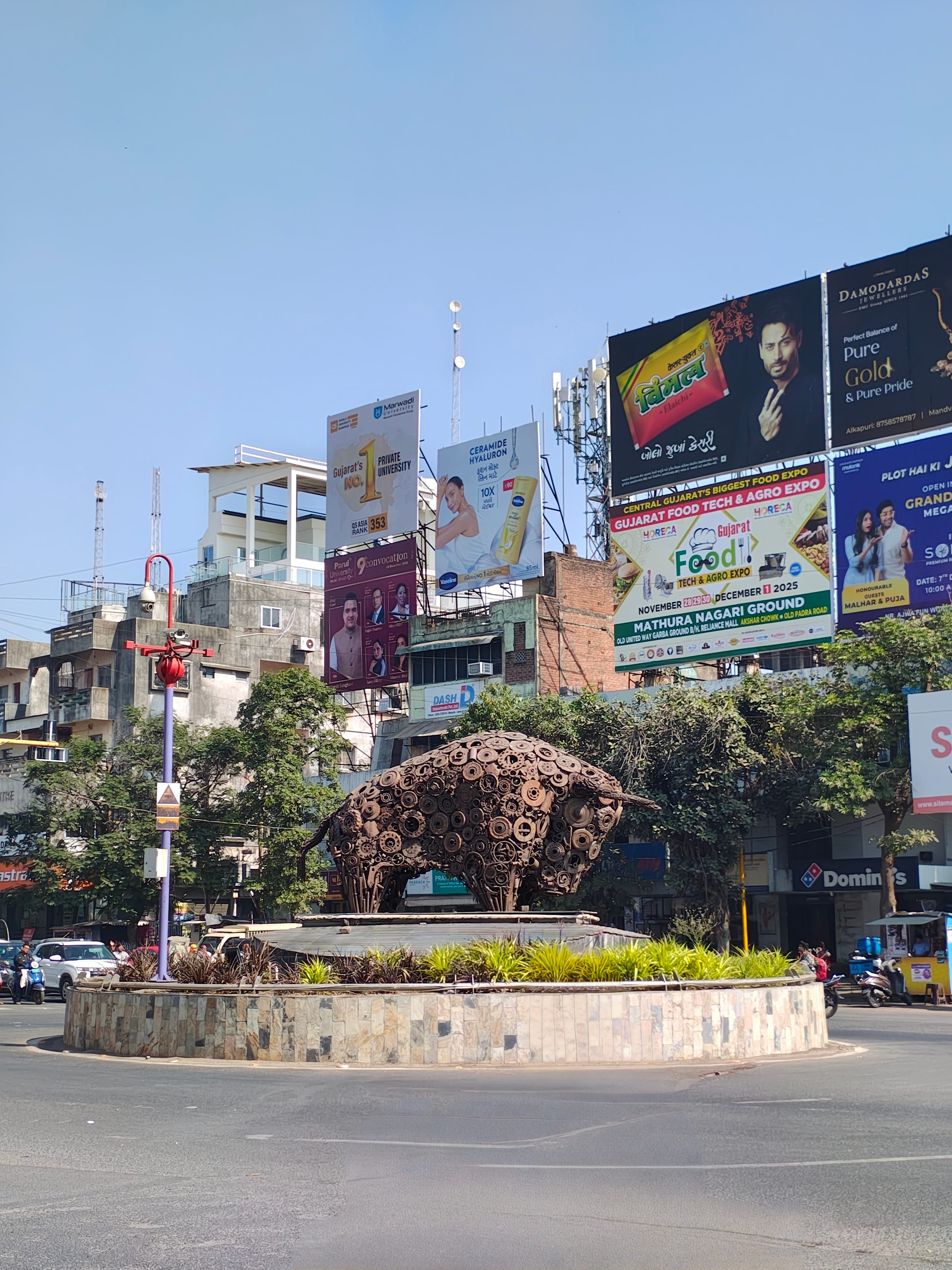
I reached the hotel, completed the check-in formalities, entered the room, and I video-called my wife to show her the room, because the long distance was in full swing back then we took every opportunity to call each other during that time.
Post the call, I Googled and realised that I still had some time left before the palace closed.
Perfect.


I booked a Rapido and headed straight there.
My first thought when I saw the palace was that it was h-u-g-e.
Not just big. Not ‘wow that’s large’ big.
It is the kind of palace that makes you instinctively whisper ‘okay this king was a pro in financial planning.’
One of the most fascinating things about Laxmi Vilas Palace is that it is still a residential palace. The royal family continues to live in a portion of the complex, while another section is open to visitors. This makes the experience slightly surreal. You are essentially walking through parts of someone’s very large ancestral home.
The guided audio tour is very helpful and walks you through the history of the palace and the Gaekwad dynasty. And somewhere in the middle of this audio narration comes one of the darkest historical anecdotes I have ever heard in a tourist guide.
Apparently during construction, the chief architect became convinced that the foundation of the palace was weak and that the entire structure would collapse. Overwhelmed by the potential disaster he believed he had created, he took his own life.
After narrating this part, the audio guide calmly concludes it with something along the lines of and you are standing today inside that very palace.
Which means two things.
One, the architect didn’t trust his work and second, the people who wrote the script for that audio loved dark/dry humour.
The palace is grand, the visitors are not. They’ll walk on the restricted area of the park, they’ll click photos on the inside of the palace even when it is strictly prohibited. Because well, we are stupid.


The tour moves through several sections and covers the entrance halls, the gardens, the armoury, and various ceremonial rooms.
One section displays historic weapons, including the famous Wagh Nakh — the weapon associated with Chhatrapati Shivaji Maharaj when he killed Afzal Khan. Seeing it up close adds a strange intensity to history. Objects like that carry stories that textbooks never quite capture.
But the most mesmerising section for me was the gallery displaying Raja Ravi Varma’s paintings. I had seen reproductions of his work before but seeing the originals is something else entirely.
The expressions, the detailing, the colours — it feels as if the figures might step out of the canvas if you stare long enough.And apparently I did stare long enough.
At one point I noticed a few other visitors glancing at me, probably wondering why this man had been standing silently in front of the same painting for several minutes.
Another lovely touch in that gallery is that you must remove your footwear before entering the room, which somehow feels appropriate.
After walking through centuries of history and art, I finally reached the end of the palace tour.
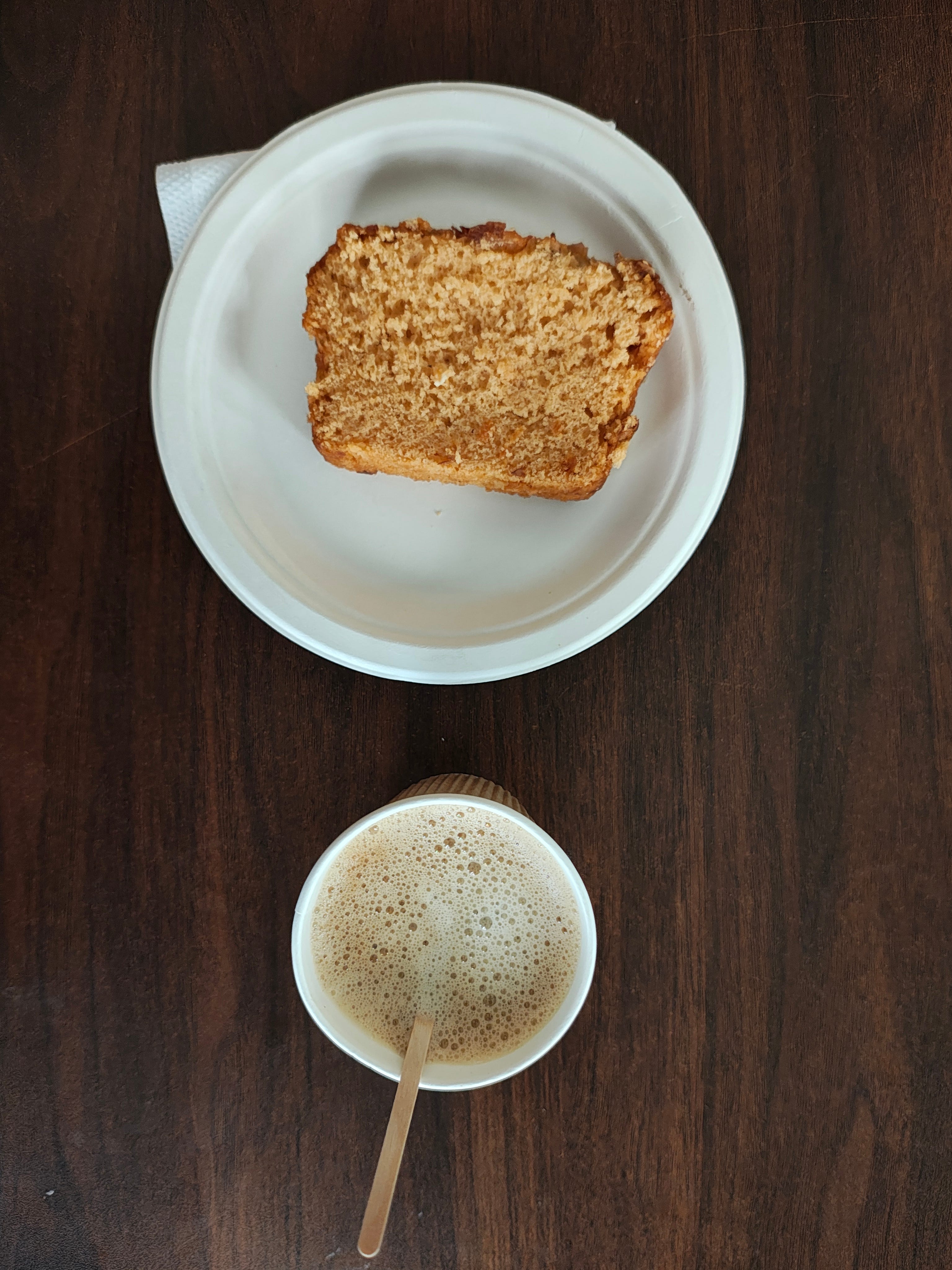
There is a café area near the exit where visitors can sit, rest, and eat something. In most tourist places these cafés operate on a simple business model: charge absurd prices because visitors are tired and hungry. But surprisingly, the café here was reasonably priced.
I ordered coffee and an almond cake which was warm and almondy and really nice.
After that I walked towards the Raja Ravi Varma museum, which unfortunately was closed that day. However, another smaller museum nearby was open. We had to deposit our phones before entering. And honestly, that improved the experience dramatically.
Without phones constantly buzzing or people taking photos of every object, the museum felt calm. People actually looked at the exhibits instead of photographing them.
By this point I had walked so much that my fitness tracker had already congratulated me thrice for completing my daily step goal.
Which usually never happens.
Once I was done with the palace, I started to walk towards the old market area of the city which has a quiet charm. The buildings are older, the streets slightly narrower, but the pace of life feels unhurried.


One thing I particularly loved was the presence of benches along the footpath. Sadly the modern cities just lack them. Here in Baroda the benches are in so many random places — along a crossing, right in front of the palace, on the footpath, and randomly near shops. How cool is that? As if the city is asking you to sit and relax.
Cities rarely think about walkers anymore. Vadodara does.
I sat down with a cup of Rajwadi chai, watching the old market gate and the steady rhythm of traffic. People passed by without hurry. Shopkeepers chatted. Scooters moved lazily through the streets. For a while I had no agenda, just observations.
Eventually hunger returned and while searching for places to eat nearby, I stumbled upon a café with excellent reviews. What made it even more interesting was that the café was run by transgender entrepreneurs. The Gazra Cafe.


The café overlooked a small lake, and the setting was peaceful enough that I decided to stay for a proper meal. On the owner’s recommendation, I ordered sabudana vada and a pineapple drink. Both were excellent. I finished the meal with guava sorbet, which might have been the best surprise of the evening.
If you ever visit Vadodara, that café is absolutely worth stopping by.
Feeling satisfied and slightly adventurous, I decided to try another famous local recommendation a supposedly legendary kachori shop. And that turned out to be the biggest anticlimax of the entire trip. The kachori was disappointing at best. I would even go as far as to say that they should stop calling it kachori to save the image of that beautiful deep fried delicacy nurtured and handcrafted with love in the northern states of India.
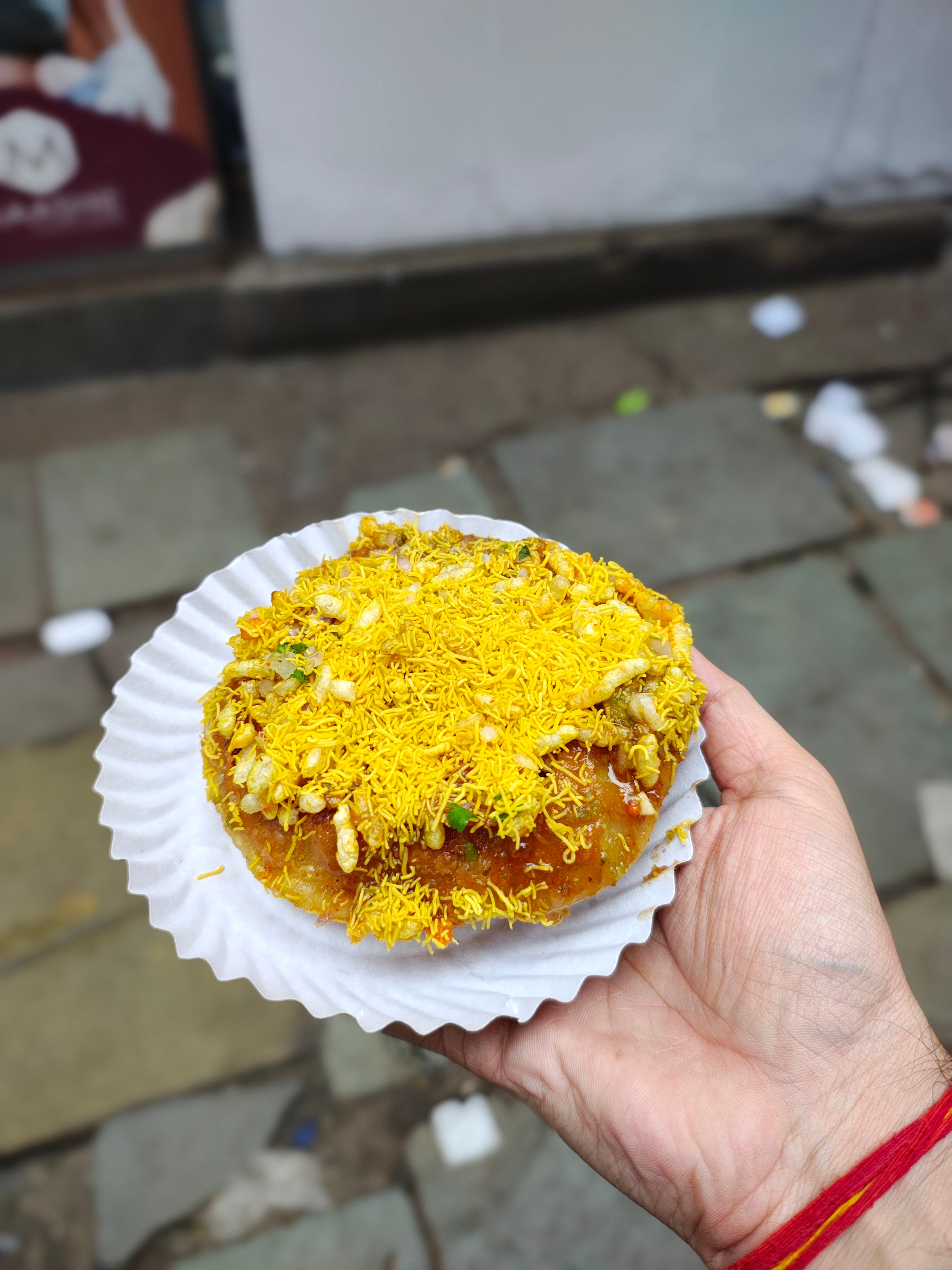
Honestly, I just want to forget this part of Baroda. I had to eat two desserts to undo the damage it had done.
The next morning I woke up early because I had only a few hours before catching my bus back. After breakfast at the hotel, I walked towards Sayaji Baug, which was barely five minutes away. And I loved it immediately.
The park is enormous and incredibly well maintained. And sorry for the lack of a better word but it isn’t a park. It is something else. There are walking tracks, play areas for children, a zoo, museum, bungalow, a river flowing alongside the park, a toy train with proper stations, and even a cable bridge. Which park has so much?
At one point I genuinely wondered: Why don’t all cities build parks like this?
Why is this not standard urban planning?
You could spend an entire day here walking, relaxing, reading, or simply sitting quietly under a tree. There is even a bungalow in the middle of the park, which once served as a royal residence.


Standing there, looking at the scale of the place, I had a slightly controversial thought: If kings built parks like this for public use maybe monarchy wasn’t entirely useless.
I also visited the Baroda Museum, which turned out to be another surprisingly well-maintained space filled with fascinating collections.


By the time I finished exploring, it was time to head back.
I reached the bus station, bought my ticket, and boarded the Volvo heading back to Ahmedabad and this time I got the window seat. As the bus moved forward, the landscape outside began sliding backwards.
And something about watching things move away quietly always pulls your mind into strange directions. Soon my thoughts drifted inward.
आज फिर
एक बार खिड़की
की सीट मिली है
अब फिर से
खुद से बातें होंगी
किसी पीछे
जाते पेड़ में
अपना अतीत दिखेगा
तो किसी फूल
में पुराना प्रेम
दूसरे शहर को
सड़क कटी
तो सोचा कि
यूं होता तो क्या होता?
दूसरे पथ पर होता
तो क्या तब भी यहीं होता?
एक चमचमाती गाड़ी
आगे निकली तो
एक पल की खुशी
और काफी देर की
कश्मकश दे गई
कि मेरे पास वह क्यों नहीं है?
उस गाड़ी में बैठी
एक बिटिया दिखी
तो अपनी याद आ गई
कि कभी तो उसके साथ भी
घूमने जाऊंगा।
बस आगे जा रही थी
और मैं समय में पीछे
समझ नहीं पा रहा था कि
मैने टिकट किस चीज़ की ली थी?
बगल की सीट पर
बैठी महिला का फोन बजा
तो ध्यान टूटा
और एक ही पल
में अतीत से वर्तमान
में आ गया
और समझा
की जो सोच
रहा था वह तो
बीता कल था
वापस नहीं आएगा
मगर उस समय का वापस
आना मुझे चाहिए भी न था
चूंकि मैं तो बस मुसाफिर था
दो शहरों के बीच से अपने
अतीत में जाना चाहता था।
By the time the bus reached Ahmedabad, the thoughts had slowly settled. The trees had stopped running backwards and the present had caught up again.
Baroda was never really in the plans.
I could have ignored it very easily and probably never thought about it again. It would have just remained another name on the map. One of those cities you scroll past without a second thought.
Vadodara was like that. A city I kept ignoring. A city that kept appearing on my screen until one day curiosity finally won.
And once I arrived, it didn’t try too hard to impress me.
It simply unfolded slowly — a palace with stories, paintings that refused to let you walk away, a park that seemed too generous for a city, benches that invited strangers to sit and breathe, and streets where life moved at a pace that felt strangely comforting.
Nothing dramatic happened there, except that kachori, that was ugh. And yet, somewhere between two cities, on a quiet bus ride with a window seat, I realised that a place doesn’t need to change your life to matter. It just needs to surprise you enough that you remember it long after you’ve left.
This was the final essay of the three part Gujarat series. You can checkout the other two essays below:


Liked what you read?
👉🏻 I publish light hearted and gluten free essays which will have you smiling and grinning from ear to ear. If that appeals to you, please consider subscribing to my newsletter.
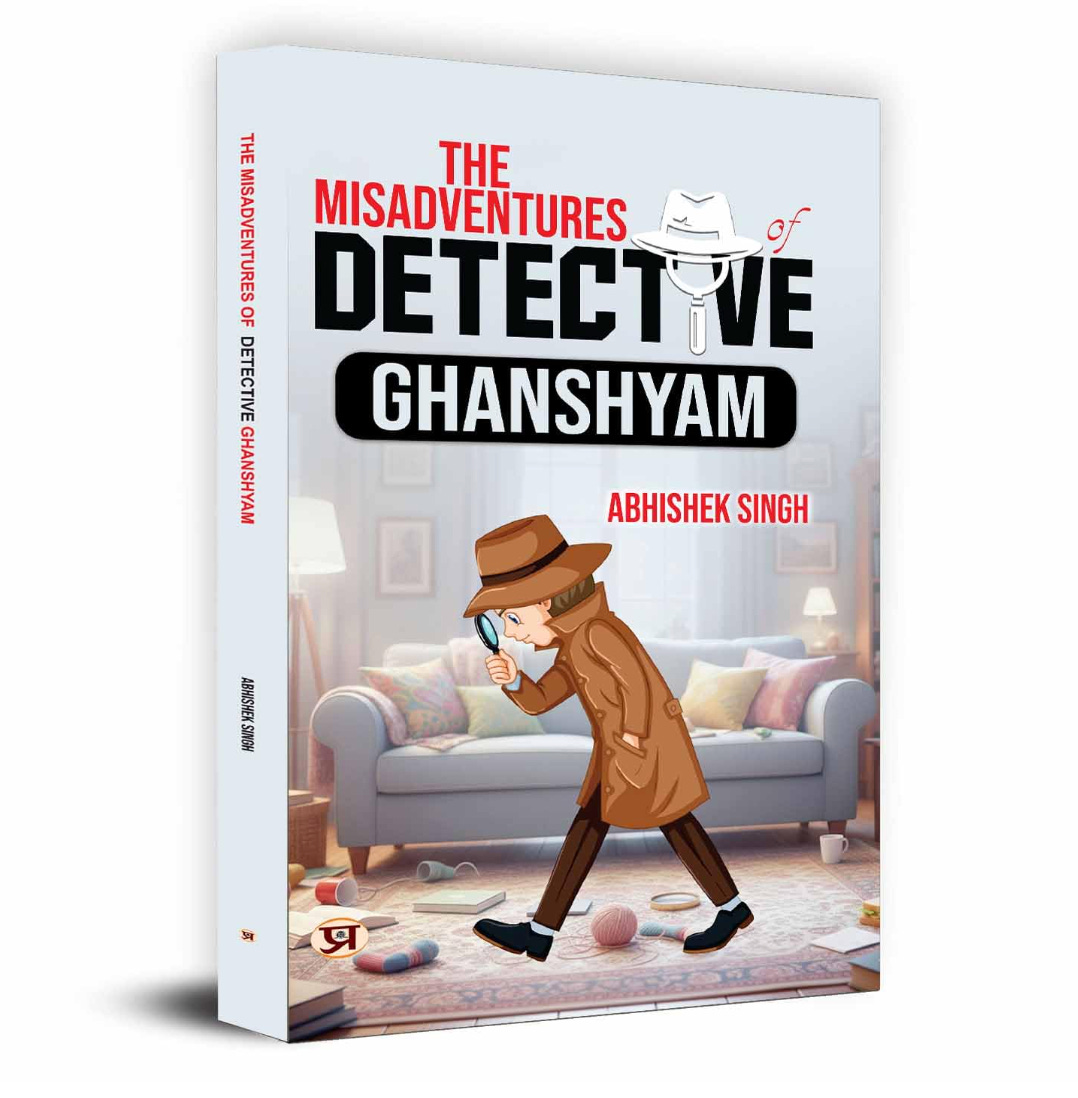
👉🏻 It would mean the world to me if you buy my debut book — The Misadventures of Detective Ghanshyam. It is a light hearted short novella about the life of wannabe teenage detective who gets outsmart by his younger sister while he tries to be like his idol, Mr. Holmes. If humour and sibling rivalries are your thing, you’ll love it! ❤
️
You can also choose to support me by buying me a tea/coffee/diet coke by clicking on this link to keep the words (caffeine) flowing.
See you in the next one!
Mr. Mark Zuckerberg
At this point, I feel like you’re doing Amitabh Bacchan’s job better than the ads — also making up for all the negative PR. Loved the zucku bit. Also, since you’ve been so inundated in Gujju culture as of late — I suggest you check Dhanji out. You might actually really enjoy his work! Loved reading this as usual!
Travel blogs !! My best (only🥲) way to dive into different cities and enjoy them...loved it throughout....The poem in mid was cherry on the top...perfect ending....That rhyming under the picture of spice and nice ...made me giggle amidst enjoying the fun blog !!
And the cutest part was you mentioning video calling your wife 🫠
Where are you visiting next???